
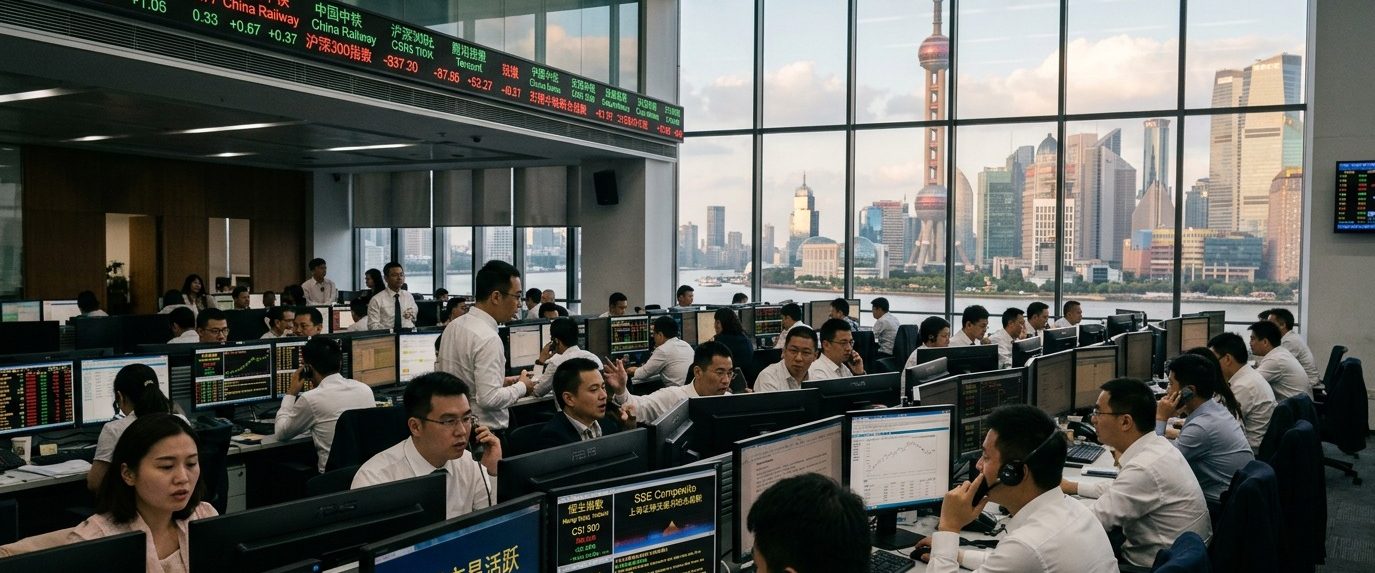
What does “business and trading education” entail in China?
When people ask about business and trading schools in China, they often mean one of two things. Option one is formal business education, which includes MBA, management, economics, and finance degrees offered by universities and business schools in China. The other is training aimed at practical market work, which can mean investment analysis, asset management, securities, futures, risk control, portfolio construction, and similar types of education aimed at traders. While the subject matter of those two tracks can overlap, but they are not the same thing.
China does not really offer a neat retail category called “financial trading schools” at the top end of serious education. What it offers is a layered system in which top business schools train managers and finance capable leaders, specialist finance institutes train people closer to markets and products, and exchanges plus regulators supply investor education and product literacy around the market itself. The broad schools matter for business positions, while the specialist schools matter more for financial trading. The exchange and regulator layer enhances practical understanding and is important to stay informed about the legal framework.
In China, the serious route into trading-related education usually runs through business and finance programs. The stronger routes tend to sit inside a chain comprised of university finance departments, specialist finance institutes, MBA or Master of Finance programs, exchange-led investor education, and regulated market training. The system is institutional rather than private.
For traders and investors with basic knowledge, the useful question is not if there is a Chinese school that teaches chart patterns or turns inexperienced traders into short term speculators. The better question is which parts of the Chinese education system actually connect to finance, securities, derivatives, investment research, and market operations. The answer points toward a small group of strong business schools, finance heavy institutes, and a regulator or exchange led investor education layer built around market access, risk awareness, and product understanding.
There is a second point here that matters for anyone with trading ambitions. The Chinese system favor finance education that is tied to institutional credibility rather than the cult of the individual star trader. That means the strongest schools train people to understand markets, not to worship them. The result is often less glamorous and more useful. A good Chinese finance program teaches valuation, accounting, macro, fixed income, derivatives, risk, regulation, and portfolio logic.
Higher education in China
China’s business and finance education sits inside the very large Chinese system for higher education. According to statistics published by the Chinese Ministry of Education, China’s higher education gross enrollment rate reached 60.2 percent in 2023, with more than 47.6 million students enrolled in higher education.
The 60.2% figure refers to the “gross enrollment ratio” (GER) in higher education, which is a standard metric used by UNESCO. Specifically, it means total enrollment in higher education (regardless of age) divided by the population of the official higher-education age group (which is 18–22 in China). So, the numerator includes all students enrolled in higher education, even if they are older or younger than that range, while the denominator is the total population number for the 18-22 cohort. This is why it is technically possible for the gross enrollment ratio to exceed 100%.
China´s system for higher education has expanded dramatically in the 21st century, and in addition to the 18-22 cohort, a lot of adult learners are now enrolled as well, including the many graduate students who are over the age of 22.
Business, finance, and trading education in China
The strongest Chinese schools in this area tend to split into two broad groups. One group is made up of broad management schools with serious finance departments, strong MBA brands, and business leadership ambitions. The other group is made up of finance heavy institutes that sit closer to capital markets, investment management, quantitative finance, and policy linked financial research. Traders and investors who care about markets usually end up needing both perspectives. Business schools give them corporate finance, management, accounting, and strategy. Finance institutes push them closer to products, valuation, risk, and market structure.
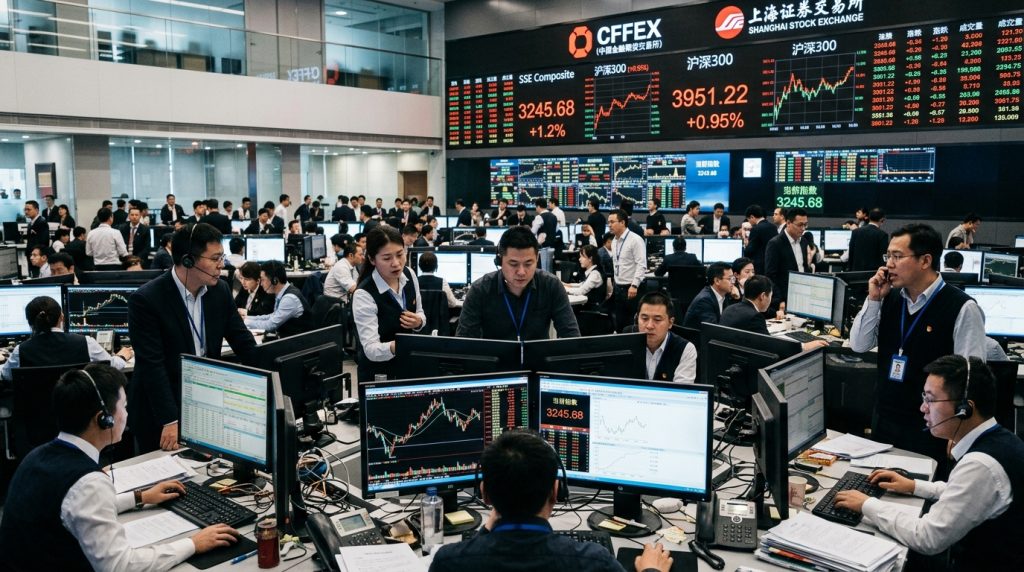
In the 21st century, China’s capital markets have become more complex and more international, which changes the type of finance education that matters. The Shanghai Stock Exchange has expanded its training and market service functions, and its published organization structure includes both an Investor Service Department and a Corporate Training Department focused on market participants and capital market training. The China Financial Futures Exchange also maintains dedicated education and investor protection sections and an Investor Education Department in its organizational structure. Market education in China is not just a university matter, it is also built into exchange infrastructure.
China is now a highly connected society, with 80% of the total population using internet in 2025/2026, and the 20% that remains offline is disproportionately comprised of older citizens, plus certain rural populations. Among 18-22 year olds, internet usage is very close to universal. With such a high connectivity in place, it comes as no surprise that the Ministry of Education has pushed for broader digital education infrastructure.
This connectivity has allowed regular Chinese citizens to learn about wester trading from websites such as DayTrading.com.
China being a highly connected and technological advanced society has also resulted in top Chinese business and finance schools increasingly offering programs that combine finance with courses in technology, data, and applied market work. In China, finance education now sits much closer to fintech, market data, and platform economics than it did a generation ago. For anyone interested in trading or investment work, what a serious curriculum can look like has changed.
How China separates business education, finance education, and investor education
The first layer is degree education. This part includes undergraduate business degrees, MBAs, EMBAs, Master of Finance programs, economics training, doctoral work, and executive education. Schools such as CEIBS, Guanghua, Fudan, Antai, SAIF, Tsinghua PBC School of Finance, and SUFE all live in this layer, though they are not doing the same job. Some are broad management schools, while others are more explicitly finance focused. Some try to bridge both.
The second layer is professional market education. This is often more important for actual market practice. It includes securities and futures related knowledge, product suitability, exchange rules, investor protection, and the operational side of market participation. China’s exchanges do not present this as a romantic path to becoming a get-rich-quick trader. They present it as market literacy, product understanding, and risk management knowledge suitable for a paid position within this field. The China Financial Futures Exchange (CFFEX) site, for example, maintains sections such as Learn ABCs, Risks I Should Know, Investor Protection, and a Futures and Options Institute. The Shanghai Stock Exchange (SSE) similarly embeds investor service, training, and suitability management in its structure. China has generally strong rules about advanced constructed financial instruments and traders who wan to learn about more exotic financial instruments like binary options have to rely on foreign websites like BinaryOptions.net.
The third layer is regulator-anchored broad investor education for students, where the China Securities Regulatory Commission is pushing to better integrate investor education into the national education system. As a part of this, they have launched the “Investor Education in 100 Schools” initiative, and are running annual World Investor Week campaigns. Exchanges have also become involved in these broad outreach programs in various capacities. In 2025, the Shanghai Stock Exchange Cup National University ETF Knowledge and Financial Planning Competition reached more than 450,000 students from over 3,000 universities worldwide, promoting rational, value, and long term investments. It is not chiefly about training future finance professionals, but about shaping broad investor behavior and promote market literacy at scale.
A student searching online for “trading education” in China may think the answer lies in a dedicated short-term trading school, but usually it does not. If the aim is serious career development in investment or markets in China, the answer is more likely to be a Master of Finance or a finance focused MBA from a strong economics or finance department, combined with regulator and exchange run training, and (later) employer based professional development.
Of course, if the goal of the trading education is just to understand financial products and avoid beginner mistakes as a small-scale investor or hobby trader, a degree will not be necessary.
The main business schools in China
Below, we will take a look at some of the main business schools in China. They are broad business schools and not more narrow technical finance schools. They all offer financial education within a wider structure that includes management, leadership, research, executive education, and more.
While all of them are much sought after among Chinese students, they also attract students from other countries, and they all present themselves as international, with English language options, exchange links, and ranking visibility aimed at a global market for business education. This has also helped make them even more appealing to Chinese students hoping to work in environments where international know-how will be essential.
For a prospective trader or investor, a main upside of these schools is breadth. You do not leave with only product knowledge. You also get accounting, organizations, strategy, and corporate finance, and more, which is useful if you ever want to work beyond pure trading, and which can also be very useful for fundamental analysis. The drawback is that these schools are not built to teach retail-style discretionary trading as a craft. They are built to train managers, analysts, founders, investors, and finance professionals at a broader level. That is why, for market facing careers, these broad business schools often function best when paired with more finance specialization. A general MBA from a leading school in China can open doors, but is rarely enough.
The China Europe International Business School CEIBS
The China Europe International Business School (CEIBS) is an international business school based in China with full-time and part-time MBA, EMBA, Global EMBA, Finance MBA (FMBA), doctoral, and executive education offerings. The school offers a dedicated Finance MBA described as combining financial depth, managerial breadth, and technological acumen. In practical terms, CEIBS is a business school with a strong finance channel inside a larger management and leadership environment. That makes it well suited to people who want exposure to finance without narrowing themselves too early into pure markets.
The standard MBA has a strong emphasis on leadership, strategy, and China market dynamics, while the Finance MBA (FMBA) is a hybrid between MBA and specialized finance degree. With the FMBA, you get more of corporate finance, investment, capital markets, fintech, and analytics.
Established in 1994, CEIBS was founded as joint venture between the Chinese government and the European Union, as part of a broader effort to bring Western-style business education into China during its economic opening. CEIBS has a strong focus on doing business in and with China, but utilizes Western-style MBA models which tend to be heavy on case method and leadership training.
The share of CEIBS students born in mainland China depends a bit on program and year, bout overall numbers show roughly 60%-70%. Among the other 40%-30% we find many students who are ethnically Chinese and speak Mandarin, but were born elsewhere. The largest non-Chinese foreign category at the school is the Indian one, followed by certain South East Asian countries. Students from Europe, USA and Canada make up around 10%, with students from other parts of the world having an even smaller representation.
The main CEIBS campus is in Shanghai, but the school is also present in Beijing and Shenzhen. (Located very close to Hong Kong, Shenzhen has become an important hub for economy and tech.) The European base for global CEIBS programs is Zurich, Switzerland.
CEIB graduates often go into international consulting, finance roles, or strategy roles at major Chinese firms. The CEIB alumni network is very influential in Asia. CEIB is best understood as a general management school with strong finance pathways.
The Guanghua School of Management at Peking University (Beijing Daxue)
Peking University’s Guanghua School of Management sits in a similar top tier as CEIBS, but its profile is slightly different, as Guanghua’s Finance Department and Master of Finance offerings point toward an academic finance route rather than only a general management route. Locating in Beijing, it sits closer to capital city powers than the world of Shanghai finance and tech.
Guanghua is one of the flagship business schools in China. Attached to a top comprehensive university, its offering includes undergraduate, MBA, EMBA, exchange, and other programs. The school’s Master of Finance in Advanced Finance contains advanced courses in economics, finance, and accounting, and can be a good fit for investment research, asset management, and capital markets work.
The Guanghua School of Management was founded in 1993, while the Peking University is almost a century older. As a part of Peking University, this business school has strong links to economics departments, public policy, mathematics, and data science, and Guanghua has a reputation for very strong academic rigor and theoretical depth in finance.
Guanghua is often a pipeline into government-related roles and policy-influenced sectors, especially compared to the business schools based in Shanghai. Guanghua has strong ties to the Central bank, Beijing-based regulators, major state-owned institutions, and policy research bodies. Still, we also find many Guanhua graduates in roles that involve investment banking, sales, trading, private equity, venture capital, hedge funds, and mutual funds.
Roughly 85%-95% of the students are mainland Chinese, with some variations depending on exact program, and even within the foreign student population, many are oversees Chinese who speak Mandarin. All in all, Guanghua is primarily a domestic Chinese elite program with a very small foreign student presence. In an average year, all or nearly all of the EMBA program students are Chinese senior executives.
Fudan University School of Management
Fudan University School of Management combines broad business school status with strong finance related options. Among other things, the offering includes a Master of Finance program, plus MBA and EMBA. Fudan is based in Shanghai, giving it a strong link into Shanghai-based banking, securities, asset management, and institutional finance. Geography does not replace curriculum, but in finance it does affect recruiting, alumni formation, internships, and the general feel of a program.
While Fundan University opened in 1905, the School of Management can trace its roots to the early management education that commenced here in the late 1920s. The School of Management did not develop into its modern structure until 1980s-2000s.
The Master of Finance is a strong finance degree that includes things such as corporate finance, investing, financial markets, and quantitative tools. The MBA and EMBA programs contain much more broad management education, but finance electives are available.
For the MBA program, Chinese students account for roughly 70-85% of the student body, depending on the year. The foreign students primarily comes from India, Korea, and South East Asia. The Master of Finance has a much higher degree of Chinese students.
The Fudan University School of Management is considered less international than CEIBS, but still much more international than Guanghua. Compared to Guanghua, Fudan is less policy-oriented and more market-facing. All in all, Fudan sits in a middle position between CEIBS and Guanghua. It is popular among students who want to be in Shanghai, but with more academic rigor than CEIBS.
Shanghai Jiao Tong University’s Antai College of Economics and Management
Shanghai Jiao Tong University (SJTU) Antai College of Economics and Management sits on the business school side of the line but still maintains a clear lane for finance oriented students. The offering includes not only the standard MBA, but also an International MBA (IMBA) and finance-focused MBA tracks. The school has activity across Shanghai, Shenzhen, and Singapore, and while all three are notable finance hubs, Schenzhen is also renowned for its tech and Singapore for its international environment. SJTU has a strong engineering and technical heritage, and Antai is popular among students looking for quantitative and analytical education. When a blend of technology + business + finance is desired, Antai is often the prime choice. Compared to CEIBS, more MBA students at Antai have a background in engineering or manufacturing.
Just like Peking University and Fudan University, SJTU is one of the famous C9 universities. The C9 League is a group of 9 top universities in China, often compared to the Ivy League in the U.S. Business education was available at SJTU as early as 1903, but the modern Antai College was not established until the 1990s. Antai is another example of how China’s strongest schools often avoid the crude split between “management school” and “trading school.” Instead, they build business platforms with embedded finance tracks, a model that has proven to be durable.
The the various MBA programs, the student body is 80%-90% Chinese, which is higher than for CEIBS and in line with Fudan. The part-time MBAs at Antai are almost entirely populated by Chinese professionals already working in Shanghai, while the full-time IMBA has the highest international representation.
Finance focused schools and institutes for trading
Below, we will take a look at the People’s Bank of China School of Finance (PBCSF), Shanghai Advanced Institute of Finance (SAIF), and Shanghai University of Finance and Economics (SUFE). What unites PBCSF, SAIF, and SUFE is that they are materially close to financial markets. Compared to the broader MBAs, these three are more inclinded to emphasize financial theory, products, institutions, capital markets, and quantitative or policy linked finance. For a person who wants to work in sell side research, buy side analysis, treasury, investment banking, risk, asset allocation, derivatives, or market infrastructure, these are generally more direct pipelines than a standard MBA alone.
People’s Bank of China School of Finance (PBCSF)
The strongest name in this group is the PBC School of Finance, which was established jointly by the People’s Bank of China and Tsinghua University in Beijing. It functions as Tsinghua’s specialized finance school, focusing on graduate education, research, and training financial professionals and policymakers. It’s essentially a Tsinghua University graduate finance school backed by the central bank.
Examples of available educational programs are PhD in Finance, Master of Finance, Master of Sci Tech and Finance, Finance MBA, Finance EMBA, and executive education. This is a finance school rather than a business school with finance as one corner of the building. The focus is finance education and research linked to practical issues in finance. For students who want policy, markets, research, and applied finance in one place, PBCSF is a direct route, with a curriculum tied to actual financial systems rather than drifting into general management. For someone interested in trading, that does not automatically mean they will be taught how to speculate in the short term, it only means they are more likely to meet serious work in asset pricing, financial economics, policy, technology in finance, and market institutions. That is a base from which a specialized trading career can grow.
The People’s Bank of China School of Finance (PBCSF) is one of the most specialized and policy-connected finance schools in China, and its creation reflected a deliberate effort to build a top-tier graduate finance institution at the intersection of academic research, financial markets, and national policy. Unlike most business schools, PBCSF is not designed around general management education. Instead, it focuses on finance as a discipline, including financial economics, asset pricing, monetary systems, regulation, and the structure of financial markets.
The school being based in Beijing is significant because Beijing is the center of China’s financial policymaking and regulatory system. This location places PBCSF in close proximity to the central bank, financial regulators, and major state institutions, reinforcing its orientation toward macro-finance, policy, and institutional finance rather than purely commercial or deal-driven activity. In contrast to Shanghai-based schools that are more exposed to markets and international finance, PBCSF’s environment emphasizes understanding how the financial system itself is designed and governed. Even the MBA and EMBA programs here are structured differently from traditional business schools, with a strong emphasis on financial theory, quantitative methods, and real-world financial systems rather than broad leadership or general management training. The curriculum is designed to engage with practical issues in finance, but from a rigorous analytical perspective, rather than focusing on short-term trading tactics or purely applied business skills.
Student demographics at PBCSF are heavily concentrated in mainland China. Across programs, roughly 85% to 95% of students are Chinese. The Master of Finance program, which is the flagship offering, usually have more than 90% China-born students. International students who do enroll are usually highly specialized, often with strong quantitative or economics backgrounds, and many have prior exposure to China and Mandarin. In PhD programs, the student body is almost entirely Chinese or China-trained, reflecting the research-intensive and policy-linked nature of the training. The MBA and EMBA programs include more experienced professionals, but they remain predominantly Chinese, particularly in the EMBA, where participants are often senior figures from China´s financial institutions and regulatory bodies.
Compared to more internationally oriented schools like CEIBS, PBCSF has a more domestically rooted and technically focused student body, with less emphasis on global diversity and more emphasis on depth in finance within the Chinese context, and career outcomes reflect this positioning. Overall, PBCSF can be understood as a highly specialized graduate finance school embedded within Tsinghua University, with a unique mandate to train professionals who understand finance not just as a career function but as a system involving markets, institutions, and policy.
The Shanghai Advanced Institute of Finance (SAIF) at Shanghai Jiao Tong University
The Shanghai Advanced Institute of Finance (SAIF) at Shanghai Jiao Tong University offers programs such as Master of Finance, Finance MBA, Finance EMBA, PhD, and executive education. Established in 2009, the Master of Finance is the cornerstone program, with a rigorous academic structure, international orientation, and alignment with market demands. The school’s public research includes themes such as household finance, fintech platforms, and credit markets. SAIF is one of China’s most market-oriented finance schools, positioned clearly as a specialized graduate finance institution rather than a general business school.
Just like several of the other universities mentioned in this article, Shanghai Jiao Tong University is one of the famous C9 universities. For SAIF, the university´s location in Shanghai is central to its identity, as Shanghai is China’s primary financial hub, home to stock exchanges, major domestic and international banks, asset managers, private equity firms, and a dense network of financial infrastructure, which gives finance students in Shanghai close access to internships, industry speakers, networking opportunities, and recruiting pipelines. While the SAIF curriculum itself is academically structured, the surrounding ecosystem reinforces constant exposure to real market activity.
SAIF was established with input from globally trained faculty, many of whom have PhDs from leading U.S. or European universities, and the current student demographics at SAIF are more internationally oriented than many Chinese finance programs, although still predominantly Chinese. Across programs, roughly 70% to 85% of students are mainland Chinese. The Master of Finance program has a noticeable international component compared to schools like Guanghua or PBCSF, with foreign students arriving not only from Asia but also Europe and North America. As with other Chinese schools, part of the foreign cohort includes overseas Mandarin speakers that are ethnically Chinese.
Overall, SAIF can be understood as a highly specialized, quantitatively rigorous finance school embedded in Shanghai’s financial center, designed for students who want deep technical training combined with direct exposure to active capital markets. It occupies a distinct position within China’s top-tier institutions: more focused and market-driven than university-based business schools like Fudan or Antai, less policy-oriented than Beijing-based finance schools, and more academically finance-intensive than general MBA programs with finance electives.
Shanghai University of Finance and Economics (SUFE)
Shanghai University of Finance and Economics also deserves a serious place in the discussion. SUFE’s College of Business is one of the early business schools in Communist China, tracing its roots to 1921. SUFE is anchored in finance and economics, which makes it a logical home for students who want to learn accounting, banking, investment, and financial analysis from a specialist institution, while also benefiting from being a part of Shanghai´s financial ecosystem. SUFE was one of the first schools in China to offer MBA and EMBA education.
SUFE was founded before the establishment of the People´s Republic, and activity here continued throughout the planned economy period, with SUFE becoming one of the key institutions for training financial professionals. Successfully transitioning through each of China´s economic reforms, SUFE now remains a leading Chinese university in the fields of finance, accounting, and applied economics.
Instead of being a business school within a general university, SUFE is a specialist finance and economics institutes, and its College of Business and related schools were among the first in China to introduce MBA and EMBA education, reflecting an early move to integrate modern management training. But compared to schools like CEIBS or even Fudan, SUFE still tends to be more technically grounded in financial disciplines and less oriented toward general management or leadership branding.
Located in Shanghai, SUFE is a part of the city´s finance ecosystem, which makes it especially relevant for students who want proximity to Shanghai´s securities firms, asset managers, banks, private equity, and market infrastructure. As mentioned above, geography is not a curriculum, but it does matter. In China, schools in Beijing tend to be stronger for policy, regulation, and central institutions, while schools in Shanghai are connected to a financial center with dense capital market activity. Shanghai’s role as China’s financial center means that SUFE students are embedded in an environment that supports internships, part-time roles, and career placement in finance-related fields.
Student demographics at SUFE reflect both its specialization and its role within China’s domestic education system. The student body is predominantly mainland Chinese, typically in the range of about 85% to 95% across most programs. Compared to more internationally branded schools like CEIBS or even SAIF, SUFE has a more domestic orientation, with a student population that is deeply integrated into China’s educational and professional pipelines. Many students here come from strong quantitative or business-related undergraduate backgrounds, often from reputable Chinese universities. The MBA and EMBA programs include more experienced professionals, particularly those already working in finance, accounting, corporate roles, or government-related financial institutions. These executive programs are even more heavily Chinese in composition, reflecting SUFE’s role as a training ground for domestic talent and leadership in finance and economics.
SUFE alumni are typically found in Chinese accounting firms, commercial banks, securities companies, asset management firms, and corporate finance roles. The university has a particularly strong reputation in accounting, auditing, and banking, but also feeds into government-related financial roles and regulatory bodies, though typically at a more operational or professional level rather than the high-level policy track associated with institutions like the People’s Bank of China School of Finance.
In broader terms, SUFE can be understood as a specialist, finance- and economics-centered university with deep historical roots and strong technical training, embedded in Shanghai’s financial ecosystem. It is especially well suited for students who want a solid, discipline-focused education in accounting, finance, or economics, combined with practical access to China’s financial industry, rather than a globally branded, general management MBA experience.
What students actually learn when aiming for market facing work
The curriculum in serious Chinese business and finance schools is usually broader than the phrase “trading education” might suggests. Even finance focused programs tend to start from economics, accounting, statistics, corporate finance, and financial theory rather than jump straight into speculative trading.
At finance focused schools such as PBCSF and SAIF, the formal program menus themselves already show the direction of travel. PBCSF offers finance degrees across master’s, MBA, EMBA, doctoral, and sci tech finance formats. SAIF structures itself around Master of Finance, Finance MBA, Finance EMBA, and finance related research. Guanghua’s advanced finance track explicitly combines economics, finance, and accounting. These combinations reflect the fact that market education in China is usually treated as an extension of economics, business, and finance, not as a separate retail craft.
For students who want market facing work, the likely learning path runs through asset pricing, derivatives, risk management, corporate valuation, macro and monetary transmission, portfolio construction, data analysis, and increasingly fintech or digital finance. SAIF’s public research stream includes work on digital payments, platform investments, mutual fund distribution, and household yield behavior. CEIBS describes its Finance MBA as linking finance with management and technology.
This also means students who are looking for “trading education” as a narrow lesson in technical indicators or short term speculation might not like what they find within the formal educational system in China. The Chinese paths are closer to institutional finance than technical analysis, and will involve the ability to read balance sheets, model risk, understand products, and carry out fundamental analysis. Trading, in that context, is one applied outcome of a wider financial education, not the entire curriculum.
The role of exchanges, regulators, and investor education programs
In China, exchanges and regulators play a strong and visible part in market education, reaching out not only to economy students and market-facing professionals, but also to ordinary consumers/investors.
As mentioned above, the 2025 SSE Cup National University ETF Knowledge and Financial Planning Competition reached more than 450,000 students from over 3,000 universities worldwide. The SSE also provide things such as investor services and corporate training functions. In other words, the exchange is not just a venue for listing and trading; it is also an educator.
The futures side does something similar. CFFEX maintains investor education, learning materials, risk guidance, and a futures and options institute, with an emphasizes on things such as contract rules, risk management, and product structure.
For traders and investors, China’s market education is decentralized but not fragmented. A serious learner can pass through a university, then through exchange and regulator produced materials, and then into employer based training, all while operating in a system that keeps repeating the same message about rational investment and risk control. That is not a perfect shield against speculation, obviously. But it does say something about how the system as a whole sees market participation.
What this means for traders and investors choosing a path
If the goal is broad business leadership with the option to move into finance, the big management schools matter most. CEIBS, Guanghua, Fudan, and Antai all fit that path, though each has a slightly different balance between general management and finance exposure. These are strong choices for people who want the China business context, corporate networks, and enough finance to move toward investment work without being trapped inside one narrow job category.
If the goal is to get closer to markets, finance products, research, and investment practice, a more specialized route can be better. PBCSF, SAIF, and SUFE sit closer to finance as a discipline and to markets as an operating environment. For someone more narrowly focused on securities, derivatives, or asset management, that is usually a cleaner fit.
It is also possible that trade independently through an online broker. This does not require any formal education. You can find a broker that accepts Chinese citizens by visiting Broker Listings.
If the goal is simply to become a better informed non-professional market participant, exchange and regulator education aimed for the masses should not be ignored. In many cases, it is more relevant than a broad economics degree for understanding specific product rules, investor protection, ETF basics, suitability, and derivatives risk.